Custom belt buckles are more than functional accessories. For fashion brands, leather goods companies and private-label businesses, they are an important part of product design, quality and brand identity.
When developing custom leather belts, choosing the right buckle material can affect the product’s appearance, weight, cost, durability and manufacturing process.
Three common materials used in custom belt buckle production are zinc alloy, brass and stainless steel.
This guide explains the differences between these materials, how to choose the right buckle for your collection and what to confirm before starting OEM production. We also show real product examples from ZC Belt so you can see how different custom belt buckles look in practice.
1. Zinc Alloy Custom Belt Buckles: Flexible Designs and Competitive Costs
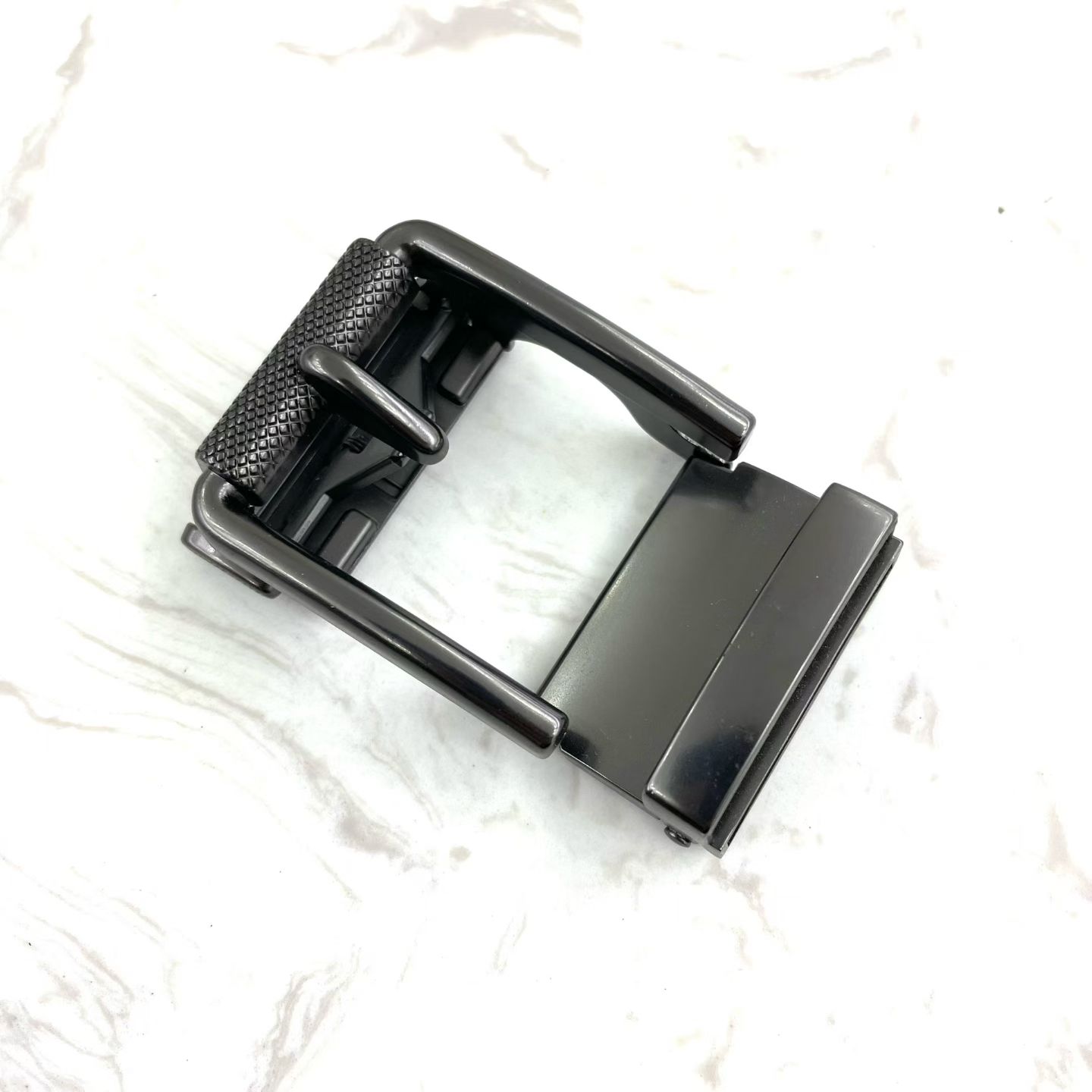
Zinc alloy is widely used for fashion belt buckles because it is suitable for die casting and can produce detailed shapes.
Manufacturers can create decorative patterns, raised logos, textured surfaces and a wide variety of buckle styles.
Main Advantages
- Suitable for complex shapes and 3D relief designs.
- Can be produced with gold, silver, antique brass, gunmetal and other finishes.
- Often more cost-effective for detailed cast designs than brass or stainless steel.
- Suitable for custom logos and decorative fashion buckles.
Important Considerations
The quality of zinc alloy buckles depends on casting, structural design, surface preparation and plating.
Poor-quality buckles may develop plating problems or break at weak structural points.
For brands developing large decorative buckles, a properly engineered zinc alloy design is often a practical option.
2. Brass Belt Buckles: A Premium Material for Classic Designs
Brass is commonly selected for premium leather accessories, especially classic men’s belts and heritage-inspired collections.
It has a distinctive appearance and can be polished, brushed, plated or finished to create different effects.
Main Advantages
- Solid, substantial feel.
- Suitable for classic and premium belt collections.
- Good corrosion resistance under normal use.
- Can develop a natural patina when left uncoated.
- Suitable for engraved logos and refined metal finishes.
Important Considerations
Brass typically has a higher raw material cost than zinc alloy. Manufacturing cost also depends on whether the buckle is cast, stamped or machined.
Uncoated brass may darken over time, which can be desirable for some brands but unsuitable for others.
Brands should confirm whether they want a polished, plated, lacquered or naturally aging finish before approving samples.
Real Product Example: Solid Brass Horseshoe Belt Buckle
The horseshoe-shaped custom belt buckle below is made from solid brass, as confirmed by ZC Belt. Brass is a copper-based alloy, distinct from pure copper. The International Copper Association provides additional information about copper and its alloys.
Its classic curved frame and gold-tone finish make this style a suitable reference for heritage-inspired and premium leather belt collections. The exact material, size, finish and fastening structure should be confirmed for each OEM order.
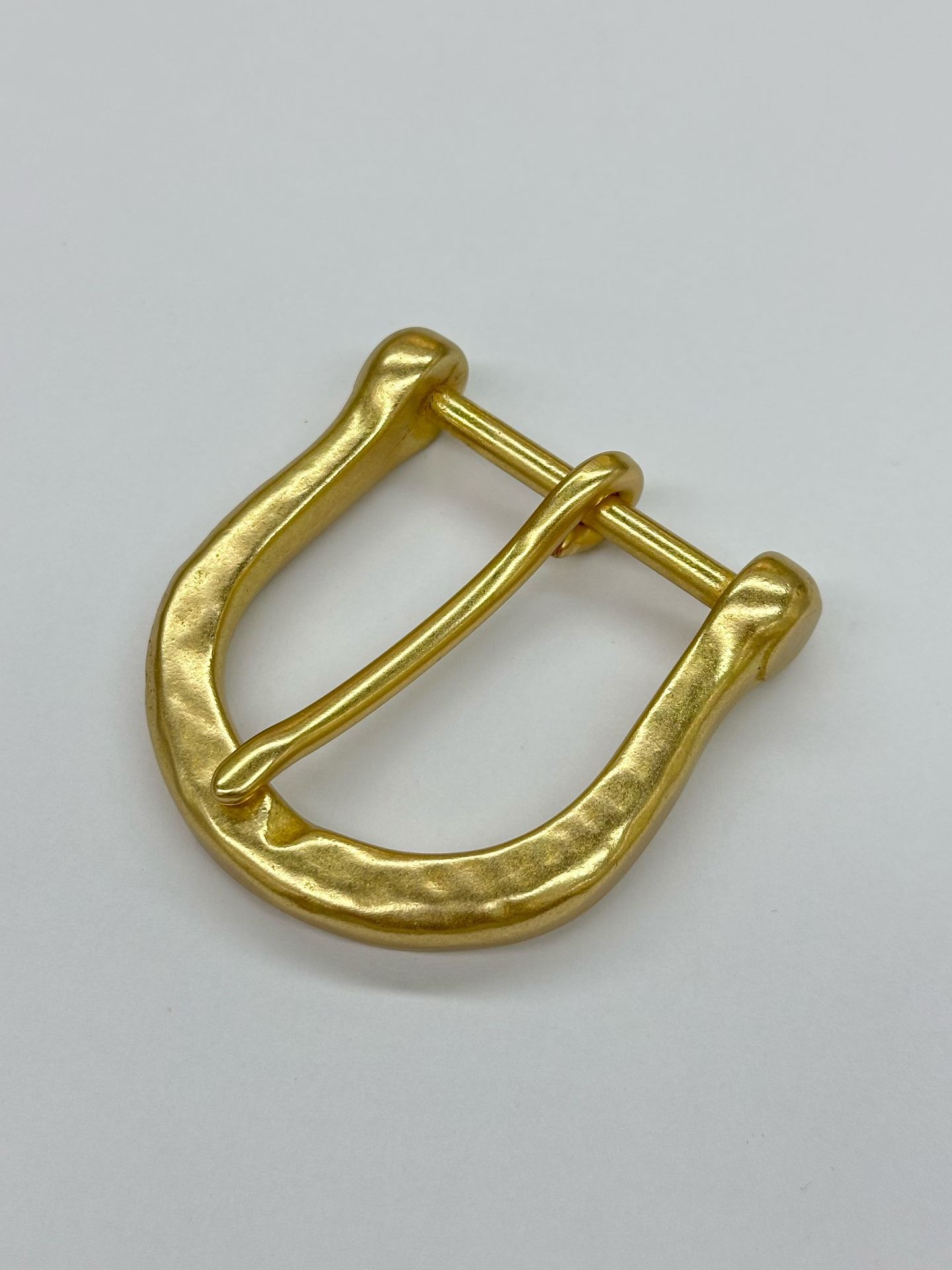
For solid brass custom belt buckles, confirm the required brass grade, dimensions, surface finish and fastening structure before approving a production sample.
3. Stainless Steel Belt Buckles: Strength and Corrosion Resistance
Stainless steel is another option for custom belt hardware, particularly when a brand prioritizes strength, corrosion resistance and a modern appearance.
It can be used for minimalist buckles, durable fastening systems and certain premium accessories.
Main Advantages
- High mechanical strength.
- Good corrosion resistance with a suitable steel grade.
- Suitable for polished, brushed and selected coated finishes.
- Appropriate for many minimalist and functional designs.
- Durable when properly designed and manufactured.
Important Considerations
Stainless steel can be more difficult and expensive to manufacture into complicated shapes.
Detailed designs may require specialized casting, machining or additional finishing processes.
Brands should also confirm the stainless steel grade, dimensions and surface finish instead of relying on a general description such as “stainless steel buckle.”
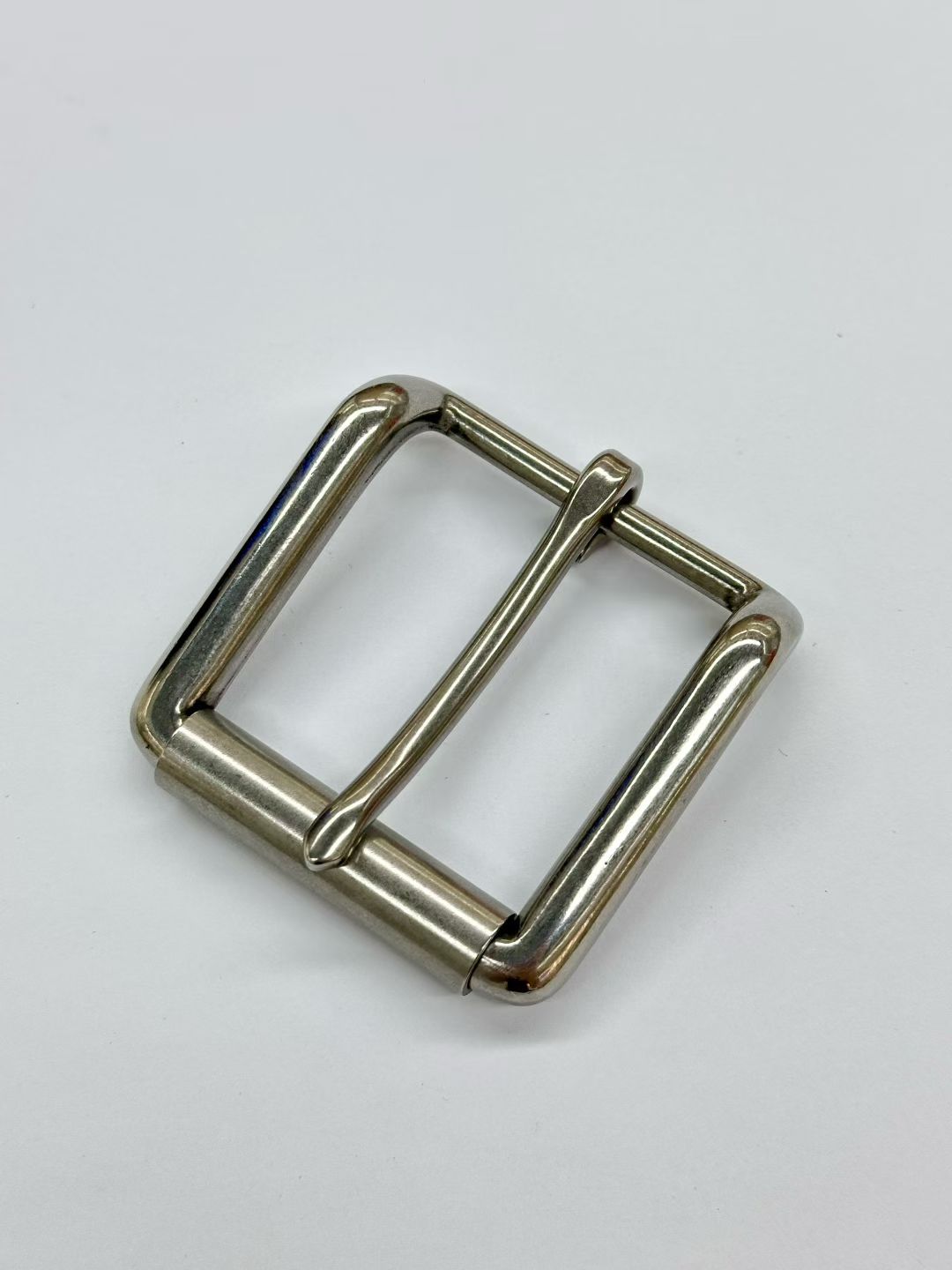
For example, the rectangular buckle pictured above is made from 304 stainless steel. Confirm the exact grade for each custom order rather than assuming all stainless steel buckles are identical.
4. Custom Belt Buckles: Zinc Alloy vs Brass vs Stainless Steel Comparison
The following table compares the three most common materials for custom belt buckle manufacturing.
| Feature | Zinc Alloy | Brass | Stainless Steel |
|---|---|---|---|
| Positioning | Fashion and decorative | Classic and premium | Durable and modern |
| Complex 3D Designs | Very suitable | Possible | Possible, often more costly |
| Material Cost | Generally lower | Generally higher | Depends on grade and process |
| Corrosion Resistance | Depends on finish | Good | Generally very good |
| Typical Applications | Logo and statement buckles | Dress and premium belts | Minimalist and functional buckles |
The best material is not necessarily the most expensive one.
A fashion brand producing decorative buckles may prefer zinc alloy, while a classic leather goods brand may choose brass. Stainless steel can be suitable for products requiring particular strength and corrosion resistance.
For custom belt buckles, the correct material choice depends on the actual buckle design, target price and manufacturing requirements—not appearance alone.
5. What Can Be Customized on a Belt Buckle?
Working with an OEM leather belt manufacturer allows brands to develop buckles that match their own product collections.
Common customization options include:
- Buckle Shape: Rectangular, rounded, oval, plate or other custom designs.
- Logo: Engraved, raised, recessed or incorporated into the metal structure.
- Surface Finish: Polished, brushed, antique, matte or textured.
- Color: Gold, silver, black, gunmetal or other available plating colors.
- Attachment: Pin buckle, detachable buckle or other fastening structures.
- Dimensions: Designed to match the belt width and strap thickness.
For example, a 35 mm leather belt needs compatible buckle dimensions. The buckle should also match the thickness and construction of the strap.
A visually attractive buckle is not enough. It must function correctly when assembled with the finished belt.
6. Custom Buckle Mold Development
If your brand requires a completely original buckle shape, custom tooling may be necessary.
The development process generally includes:
- Reviewing the design, reference images or technical drawing.
- Confirming buckle dimensions, material and attachment structure.
- Preparing technical drawings or a 3D model when required.
- Confirming mold or tooling costs.
- Producing and checking an initial buckle sample.
- Adjusting the design before bulk production.
Custom molds are particularly important for decorative buckles with raised patterns, three-dimensional logos or special structures.
Tooling costs and production requirements depend on the material, complexity and manufacturing method.
Using an existing buckle design can be a more economical alternative for brands that do not need completely unique hardware.
7. What Should You Check Before Approving a Sample?
Before confirming mass production, brands should inspect both the appearance and function of the buckle.
Recommended Sample Inspection Checklist
- Confirm the overall dimensions and weight.
- Check logo positioning and clarity.
- Inspect the metal surface for scratches, pits or casting defects.
- Review the plating color and finish.
- Check for sharp edges or uncomfortable contact points.
- Test the fastening mechanism repeatedly.
- Confirm the buckle fits the belt width and thickness.
- Check that all detachable components remain secure.
For markets with specific chemical or product safety requirements, brands should also confirm applicable testing and documentation with their supplier.
Approving a complete belt sample, rather than a separate buckle alone, helps reduce compatibility problems during bulk production.
8. Custom Belt Manufacturing with ZC Belt
At ZC Belt Custom Factory, we support OEM and ODM leather belt production for fashion brands, wholesalers and private-label businesses.
Our customization options include leather materials, strap dimensions, buckle matching, logo application, finishing and packaging.
Our Custom Manufacturing Services
- Minimum Order Quantity: Starting from 100 belts.
- Sample Development: Paid samples available before bulk production.
- Buckle Customization: Existing buckle selection and custom development options.
- Leather Options: Genuine leather and other suitable materials.
- Branding: Custom logos, private labels and packaging.
- Quality Control: Inspection and production follow-up.
- International Shipping: Shipping support for overseas customers.
Sample fees are quoted according to the design and materials. Custom buckle tooling may require additional fees and separate production minimums.
Sampling and bulk production lead times depend on design complexity, material availability, order quantity and tooling requirements. A production schedule can be confirmed after reviewing your specifications.
9. Frequently Asked Questions About Custom Belt Buckles
Which material is best for custom belt buckles?
Zinc alloy is often suitable for detailed decorative designs, brass for premium classic styles and stainless steel for strong, modern hardware. The final choice depends on your product requirements.
Can I put my brand logo on the buckle?
Yes. Depending on the material and manufacturing process, logos may be engraved, raised, recessed or incorporated into a custom buckle design.
Do I need a mold for a custom buckle?
Not always. Existing buckle styles may support certain logo or finish modifications. Completely original buckle shapes often require custom tooling.
What is the MOQ for custom belts?
ZC Belt’s standard minimum order quantity starts from 100 belts. New custom buckle molds and special hardware may have separate minimum order requirements.
Can I order samples before bulk production?
Yes. Paid samples are available. Sampling allows you to confirm the leather, buckle, dimensions, logo and workmanship before placing a production order.
10. Start Your Custom Belt Project
Whether you are developing a new fashion collection, upgrading your buckle design or launching a private-label belt brand, selecting the right materials and hardware is an important first step.
ZC Belt can help review your designs, match suitable materials and develop samples before production.
Send us your buckle reference photos, belt dimensions, preferred materials, logo requirements and estimated order quantity for a customized quotation.
Looking for a reliable custom leather belt manufacturer in China?
Visit ZC Belt Custom Factory to explore our OEM and ODM manufacturing services.
You can also explore more manufacturing information in our Leather Belt Sourcing Guides.
ZC Belt Custom Factory — Guangzhou, China